Advocacy
Dignified return
Danish Refugee Council (DRC) has provided counselling to rejected asylum seekers for many years. Our priority is to ensure that each person's dignity is respected throughout the return process. We aim to empower individuals to make informed decisions about their future, whether that means exploring pathways for legal stay or working towards sustainable reintegration.
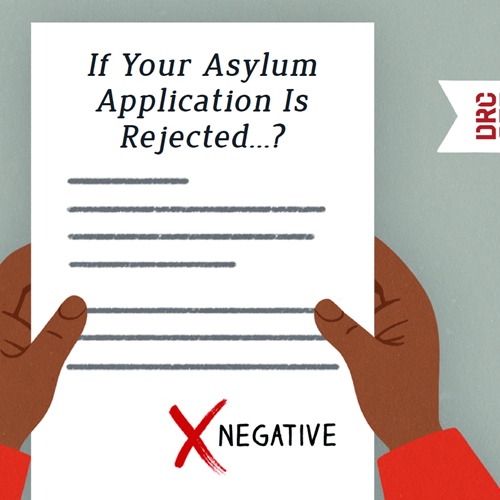
Impartial return counselling aims to empower the individual asylum seeker and supports them in the process of making informed decisions
DRC offers return counselling to rejected asylum seekers and has a team of experienced counsellors, skilled in social work and good, empathic communication. This allows them to engage in meaningful counselling with rejected asylum seekers about their situation. We have many years of experience providing counselling to exactly this target group.
The return counselling is impartial and only provided with a humanitarian aim to support and contribute to clarification among asylum seekers in a return position.
DRC works rights-based and with a purpose to ensure that asylum seekers have access to thorough information about their situation and about the different choices and possibilities available to them. Our aim is to support them in making informed decisions about their future.
The counselling does not necessarily focus on return. Instead, the counselling takes a holistic approach and is based on the understanding that the asylum seeker is an expert in his or her life. The main purpose is to support informed decisions and inspire the individual’s agency.
DRC counsellors apply DRC’s return counselling methodology which is an approach that has been developed over several years to ensure a qualified and professional approach that addresses the complexity of return counselling. It is based on a deep professional understanding of a vulnerable and complex target group with different resources and challenges as well as a fundamental recognition of the difficult situations many asylum seekers face.
Many rejected asylum seekers need time to adjust to their new situation. Some may feel frustrated, be sad, lack capability to act, or feel completely detached from their own asylum case.
The starting point for counselling is always the asylum seekers’ own perspectives and thoughts about their future. Counselling is thus guided by the topics that the asylum seeker brings to the table and will often involve conversations about the legal process and rejection, worries, as well as possible strategies and plans for the future.
DRC’s return counsellors offer more than just accurate information. DRC wants to create a counselling space that is safe and allows for qualified conversations, where all topics are welcomed, and where there are always two experts present: the counsellor with the solid knowledge about the asylum system, and the asylum seeker, who is an expert in his or her own life. The counselling is thus always person-centered, adjusted to the individual, and based on the principles of recognition and empowerment.